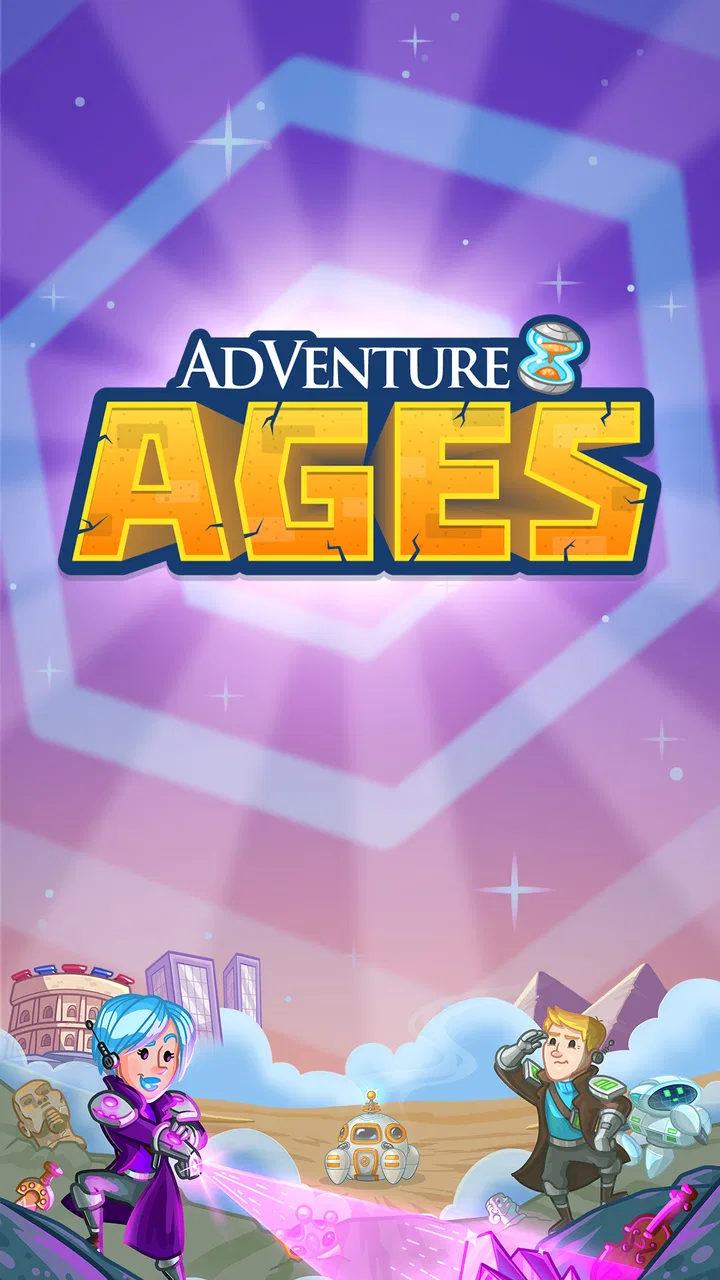
AdVenture Ages: Idle Clicker
- 4.3
- Rating
- 1.00M
- Installs
- Free
- Price

 Analysis by App-foxy
I spent time with AdVenture Ages: Idle Clicker as a casual simulation game, and my first impression was that it is built for short, repeatable visits rather than long sessions. The central appeal is simple: you begin a progression loop, improve it, leave the game alone for a while, and return to collect the results. That rhythm makes it easy to fit around a commute, a coffee break, or a few spare minutes at the end of the day.
What makes the experience more interesting than a basic tapper is the feeling of managing a small historical progression. You are not simply pressing one button forever. You are deciding when to spend resources, when to improve production, and when to wait. Those choices are light, but they give the idle format enough structure to keep me checking back.
The game is free to start and comes from Hyper Hippo. It is listed for Everyone, has passed one million installs, and holds an average rating of 4.3 from roughly thirty-eight thousand ratings. That audience size makes sense to me: this is approachable entertainment for players who enjoy gradual progress without needing complicated controls or a demanding competitive schedule.
You May Also Like

 Blood Strike: 2.5 Anniversary
Blood Strike’s Loadouts Turn Every Drop Into a Tactical Gamble
A close look at Blood Strike’s custom loadouts: how fast access to signature weapons reshapes its battle royale rhythm, rewards preparation, and narrows the gap between fights.

 Pandora - Music & Podcasts
Pandora’s Music Is Easy to Start, but Harder to Recover
Pandora’s strength is its low-effort path from a seed to a station. Its weak spot is how much confidence it asks you to place in connection, setup, and quiet recovery.

 8 Ball Pool
 Is Built on Rivalries, Rematches, and Routine
A close look at the rivalries, rematches, shared routines, and unanswered safety questions that turn a quick pool match into a persistent mobile community.

 Samsung Music
’s Quiet Strength Is Playing What You Already Own
Its reach comes less from spectacle than from dependable access to a personal library. That simplicity is both the app’s strongest retention engine and its ceiling.

 AccuWeather: Weather Radar
AccuWeather Review: A Quick, Clear Forecast for Everyday Decisions
For everyday plans, the best forecast is the one you can understand quickly. AccuWeather makes rain timing, radar, and local conditions easy to act on, with a few trade-offs.

 Hill Climb Racing
Why Hill Climb Racing Still Turns Crashes Into One More Run
A tiny car, a bumpy hill and one more upgrade: Hill Climb Racing keeps resurfacing because its simple chaos makes every near-miss feel personal.
More From Our News Desk



How I built a reliable daily routine
I make the routine dependable by tying each visit to a moment I already have, rather than checking whenever I feel a nudge to tap. That keeps the game from competing with work or rest, and it gives me enough time between visits for a decision to matter. Once that habit feels natural, it is easier to notice whether the way the game presents information and choices suits me.
The baseline loop is about timing, not constant tapping
My most useful habit was to treat each visit as a quick management session. I would first collect whatever had accumulated, then look at the available upgrades, and only after that decide whether to spend everything immediately. Spending without checking the next useful improvement can leave the account feeling busy but inefficient.
The important distinction is between resources that improve the current production cycle and resources that unlock a broader step forward. When both options are available, I prefer the improvement that helps me continue earning after I close the game. That matters because the title’s idle value comes from what happens while I am away, not only from what I do while looking at the screen.
A realistic everyday example is a lunch break. I can open the game, collect progress, make a few upgrades, and close it again without needing to remember a complicated sequence. Later, I return to a larger amount waiting for me. This makes it a better match for fragmented free time than a simulation that expects a long uninterrupted session.
I also found that returning too often can reduce the relaxed feeling. If I open the game every few minutes, the decisions are usually too small to feel meaningful. A better routine is to check at natural points in the day, especially when I have enough accumulated progress to make a noticeable upgrade.
What to do when progress feels slow
Slow periods are part of the design, and they are where patience becomes more valuable than frantic tapping. I look at the cheapest improvement that changes the earning pace, rather than spending on every available option simply because it is affordable. A small purchase that strengthens the whole loop can be more useful than several minor purchases that only make the interface look busier.
Another practical approach is to set a personal stopping point. If the next meaningful improvement requires a long wait, I close the game and return later instead of trying to force progress through repeated manual actions. This keeps the game in its strongest role: a background simulation with occasional decisions.
Players who want constant action may find this disappointing. The game does not replace a traditional strategy title, management game, or fast clicker where every second demands attention. Its satisfaction comes from planning the next return, not from maintaining intense activity.
Settings and phone habits worth checking
Before settling into a routine, I recommend checking the game’s available settings on your device and keeping notifications under control. I prefer alerts only when they are useful to my schedule; otherwise, an idle game can become a source of unnecessary interruptions. The best setup is the one that lets the game wait quietly until I choose to return.
It is also worth checking sound and vibration preferences before playing in public or during work. A simple simulation can be pleasant in the background, but repeated effects become distracting when the game is opened frequently. Adjusting those options makes short visits feel cleaner and less intrusive.
I would also review the phone’s battery behavior if you play many idle games. There is no reason to leave a game open continuously just to preserve the idea of progress. Closing it after making decisions is a better habit for most players, and it reinforces the intended return-and-collect rhythm.
Because the game supports Android 7.0 and later, it is accessible on a wide range of Android phones. Still, compatibility does not guarantee the same comfort on every device. On a smaller screen, menus and upgrade choices may feel more cramped, while a newer phone will generally make repeated visits feel smoother. I would test the controls for a few sessions before deciding whether it deserves a permanent place on the home screen.
Shortcuts are really repeatable habits
There is no need to invent a complicated “secret” method to play efficiently. My fastest pattern is consistent: collect, inspect the strongest available improvement, spend with a purpose, and leave. Repeating that order prevents me from losing time to random tapping and keeps each visit focused.
I also separate active play from idle preparation. When I know I will be away for a while, I make the upgrade that improves the next unattended period. When I expect to check again soon, I may choose an improvement that gives quicker immediate progress. That small distinction makes the same resources feel more flexible.
Another useful habit is to avoid judging an upgrade only by its price. I ask whether it changes the next few visits or merely provides a tiny increase that will take a long time to notice. This is especially helpful when several options appear affordable at once. The cheapest button is not automatically the best button.
For players who enjoy a checklist, I would use three questions at every visit:
- What can I collect now?
- Which available improvement affects future idle progress most clearly?
- Am I making this purchase because it helps, or simply because I can afford it?
That checklist is simple, but it stops the game from becoming a string of automatic taps. It also makes progress easier to understand, because I can connect each purchase with a specific reason.
Where the idle formula starts to show its limits
The same structure that makes the game accessible can also make it repetitive. Once I understood the basic loop, many visits began to feel familiar: collect, upgrade, wait, repeat. The historical theme gives the progression personality, but it does not remove the underlying repetition.
This is not a problem if you want a low-pressure companion game. It becomes a weakness if you are looking for deep simulation, detailed economic modeling, or decisions with dramatically different consequences. The game offers manageable choices, not a complex sandbox where every strategy produces a completely different career.
The free-to-play design also deserves attention. Optional in-app purchases range from $0.49 to $94.99 per item. I would not recommend buying anything during the first few sessions. Play long enough to decide whether the basic loop itself is enjoyable, then consider whether spending would genuinely improve your experience rather than simply shorten the waiting.
That price range means different players should set different boundaries. Someone who treats the game as a free five-minute distraction can comfortably ignore purchases. A dedicated player may be tempted by faster progress, but faster progress can also remove the waiting periods that give an idle game its purpose. In my view, spending is least useful when it turns a relaxed routine into a race.
I also would not choose this game for a child simply because the age label says Everyone. The content is approachable, but any game with optional purchases deserves sensible device-level purchase controls and adult guidance. That is less about the theme and more about making sure a free download stays within the household’s expectations.
How it compares with other simulation choices
Compared with a traditional city-builder, this is much lighter. You will not spend the same amount of time arranging roads, balancing several physical resources, or responding to a detailed population model. That makes AdVenture Ages easier to pick up, but it also means it cannot provide the same sense of ownership over a living settlement.
Compared with a standard clicker, the historical progression gives the routine more context. A pure clicker can become visually and mechanically narrow very quickly, while this game gives the player a clearer sense of moving through eras and improving a broader process. Still, the underlying satisfaction remains incremental, so players who dislike waiting will not suddenly enjoy the format because of the theme.
It also differs from competitive strategy games because there is less pressure to react to other players. I can play at my own pace and return when convenient. That is a strength for anyone who wants a calm mobile game, but a weakness for someone who needs social rivalry, live events, or constant tactical surprises to stay interested.
Who will get the most from it
I think the best audience is someone who enjoys visible progress in small portions. If you like opening a game several times a day, making one or two sensible decisions, and watching a long-term account improve, the structure fits well. It is also a good option for people who want a simulation game that does not require a tutorial-sized commitment every time they return.
It works particularly well as a secondary game. I would not make it the only game on my phone, but I can see keeping it available for moments when I want something more engaging than scrolling and less demanding than a full strategy session.
I would skip it if you want immediate action, precise control, or a campaign with a strong ending. I would also look elsewhere if you dislike monetized progression in principle, even when purchases are optional. The free entry is convenient, but the presence of purchasable items is part of the experience and should be considered before investing serious time.
What experienced play looks like after the novelty fades
After the early excitement, mastery is less about discovering a hidden trick and more about reducing waste. I keep my visits purposeful, avoid spending just to clear every notification, and choose upgrades based on the next period of play. That mindset preserves the game’s relaxing quality while still giving me a sense of control.
I also accept that not every session needs to produce a breakthrough. Some returns are simply maintenance: collect what is ready, make a modest improvement, and leave. Treating those sessions as part of the rhythm prevents the common mistake of expecting every opening to feel rewarding in a dramatic way.
The current version is 1.35.0, and the game has been available since February 1, 2021. Those details place it as an established idle title rather than a brand-new experiment, which is useful for anyone who prefers a game with an already familiar format and a sizeable player base.
My final view is positive but specific. AdVenture Ages: Idle Clicker is strongest when you use it as a quiet progress routine, not as a full-time game. Hyper Hippo has made something easy to understand, simple to revisit, and flexible enough for short daily sessions. Its limitations are equally clear: repetition, waiting, and a purchase system that some players will want to avoid entirely.
If that trade-off sounds comfortable, I think the free download is worth trying. Give it enough time to see whether collecting and planning feels satisfying before spending anything. If you want a deeper simulation or more active strategy, choose a different game; if you want a friendly idle companion with a historical flavor, this one earns its place in that narrower category.
For me, the deciding factor is how little effort it asks for while still giving each return a small purpose. I can play for a minute, make a better choice than the last time, and close it without feeling behind. That is not a substitute for a larger strategy experience, but it is exactly why I would recommend it to a friend looking for a calm, repeatable mobile game.
FAQs for AdVenture Ages: Idle Clicker
01What is AdVenture Ages: Idle Clicker?
AdVenture Ages: Idle Clicker is an incremental strategy game where you build a time-traveling empire by collecting resources, upgrading historical ages, and completing missions. The game combines idle progression with active tapping and management, allowing your production to continue while you are away. It is designed for casual sessions, but regular check-ins help you progress faster and unlock additional content.
02Is AdVenture Ages: Idle Clicker free to download and play?
Yes, AdVenture Ages: Idle Clicker is free to download and play on supported mobile devices. However, it includes optional in-app purchases that can provide premium currency, boosts, event items, or other conveniences. You can make steady progress without paying, although players who want to advance more quickly may encounter offers designed to speed up production and upgrades.
03Does the game work offline?
The game can generally continue resource generation while you are away from the app, which is an important part of its idle design. Nevertheless, an internet connection may be required for certain features, including advertisements, cloud-related functions, events, purchases, and account synchronization. For the most reliable experience, open the game online periodically so your progress and limited-time content can update correctly.
04How does progression work in AdVenture Ages: Idle Clicker?
Progression revolves around earning resources, upgrading producers, completing objectives, and unlocking new historical periods. Some actions are automatic, while others require you to decide which upgrades and missions should receive priority. As your production improves, you can reach milestones more efficiently and access additional systems. The game rewards consistent play, so returning regularly is usually more valuable than tapping continuously for a short time.
05Are advertisements and in-app purchases required?
Advertisements and purchases are not normally required to experience the main game, but they can influence the pace of progression. Optional ads may offer rewards such as temporary boosts or additional resources, while in-app purchases can provide premium items and convenience. Players who prefer a completely uninterrupted experience should review the store listing and purchase settings before downloading, especially if the device is shared with children.
Pros
- Simple idle gameplay works well for short play sessions.
- Offline progress lets you earn resources while away.
- Distinct historical eras give progression a clear sense of purpose.
- Multiple resource types add variety beyond basic tapping.
- Frequent objectives provide useful direction for new players.
Cons
- Progress can feel slow without spending premium currency.
- The interface may become crowded as more eras unlock.
- Repeated missions can make the long-term gameplay feel routine.
- Premium offers and purchase prompts appear regularly.
- Late-game upgrades often require substantial waiting or grinding.

AdVenture Ages: Idle Clicker
Gallery